hafiz mahmood · 2026-08-27

Safe driving for new drivers explained
Short definition: "safe driving for new drivers" means combining legal knowledge, vehicle control and a cautious attitude to prevent collisions by obeying rules, managing speed and gaps, avoiding distractions, and practising in varied conditions while progressing through Ontario's graduated licence stages.
Why it matters in Ontario: legal and licensing context
Ontario uses a staged licence system, commonly shown as G1, G2 and G, to help new drivers gain experience in lower risk settings before full licensure. The provincial pages on how to get a G licence explain what each stage allows and what experience is expected to move forward. The Ministry of Transportation's Driver's Handbook stresses that safe and responsible driving depends on knowledge, skill and attitude, and that drivers may be found responsible for a collision if they could have done something to avoid it, even when another road user made a mistake. For official details, see the provincial guidance on getting a G licence and the MTO Driver's Handbook on safe and responsible driving.
Core behaviours every new driver should practise
The following action oriented behaviours define safe driving for new drivers. Each item is practical, measurable and directly linked to collision prevention.
- Manage speed and choose safe gaps. Always obey posted limits and slow down for road, traffic and weather conditions so you can stop or steer away from a sudden hazard. For example, if visibility is low on a rainy day, reduce speed until you can clearly see the road ahead and other vehicles.
- Scan continuously and position your vehicle. Look ahead, to mirrors and into blind spots every few seconds. Position your car to be visible to others and to keep an escape lane, for example leaving space to the right if a cyclist is passing on the left.
- Maintain a safe following distance. Use a two to four second rule under normal conditions and increase the gap in rain, snow or heavy traffic. A longer following distance gives you time to react and reduces the chance of a chain reaction crash.
- Control distractions and phone use. Put phones and other devices out of reach, set navigation and audio before leaving, and do not handle a device while driving. Even brief distraction can make you miss a hazard and influence legal fault after a collision.
- Wear seatbelts and manage passengers. Require all occupants to buckle up and limit passenger behaviours that can distract you, such as loud conversations or physical movement while you are learning.
- Adjust for night and adverse weather driving. Slow down, increase gaps and use lights, wipers and defoggers properly when visibility or traction is reduced. Practice driving on quieter roads before attempting higher speed highways at night.
- Adopt a defensive mindset. Expect other road users to make mistakes, identify escape routes, and plan safe responses. Defensive anticipation reduces crash risk more than relying on perfect behaviour from others.
These behaviours reflect MTO guidance on strategic driving techniques, risk perception and collision avoidance. New drivers should practise each skill deliberately during lessons and supervised driving hours to make them habitual.
How an MTO approved BDE course supports safe driving

An MTO approved Beginner Driver Education course teaches the combination of knowledge, skill and attitude that underpins safe driving. The MTO Driver's Handbook lists the learning outcomes expected from formal driver education, including strategic driving techniques, positive attitudes, distraction avoidance, risk perception and handling freeway, night and adverse condition driving. A structured BDE program speeds up the transition from basic vehicle control to safe, independent decision making.
What to expect in online modules
Online lessons cover rules of the road, hazard recognition, decision frameworks and scenario based learning so you build a mental toolkit before practising in the car. This theory foundation helps you understand why instructors ask you to do certain drills during in car lessons.
What in-car lessons teach
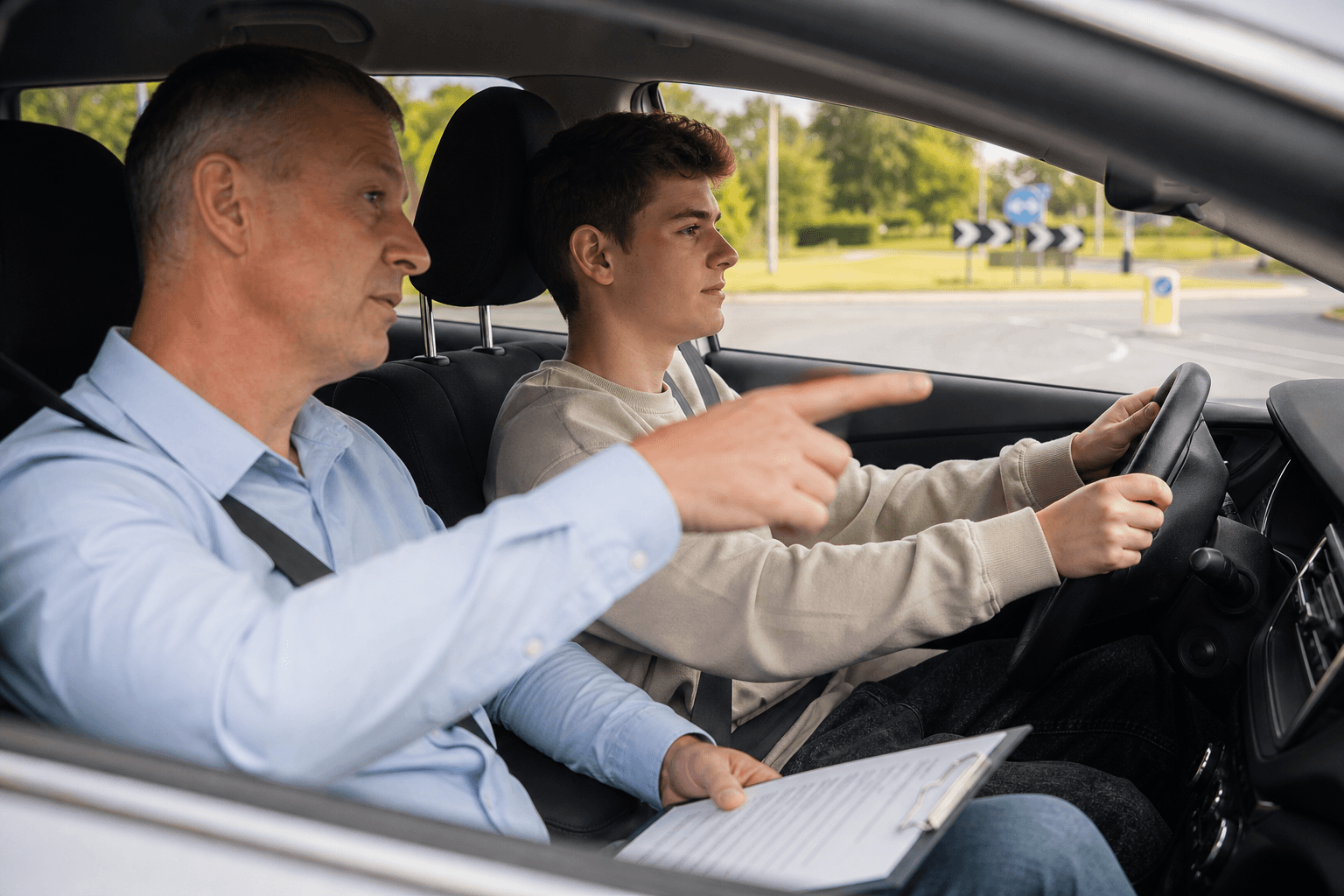
In-car instruction focuses on vehicle control, smooth braking and acceleration, scanning, lane discipline, merges and intersection strategies. Local instructors coach real time corrections, run practice on likely test routes, and introduce more complex tasks gradually such as highway merging and parallel parking.
How completion interacts with licence steps and insurance
Completing an approved BDE course provides a formal certificate that the province recognises as part of driver education. Many insurers also acknowledge BDE completion when considering discounts, but actual premium changes vary by company so confirm details with your insurer before assuming a specific saving. Local driving schools in Brampton and the GTA commonly combine online hours, Home Link practice and in car lessons into packages that meet MTO expectations and improve readiness for the road test. For related first-party details, review top driving schools in toronto.
What to look for in a Brampton or GTA driving school
Compare local schools with these objective criteria to judge training quality and value.
- MTO approval. Confirm the school is approved to deliver the provincial BDE curriculum so your certificate is recognised.
- Balanced delivery. A mix of self paced online learning and supervised in car lessons helps theory and practice reinforce each other.
- Dual brake training vehicles. Cars with dual controls increase safety during lessons and are useful if you need a school car for the test.
- Instructor choice and local route knowledge. Being able to choose a male or female instructor and a teacher who knows Brampton and nearby test routes makes practice more relevant.
- Road test support. Check if the school offers a car for the test, practice on the test day and early test booking assistance.
- Transparent packages and scheduling. Compare included lesson hours, Home Link requirements, and any add on fees like a test car or expedited booking.
When you contact schools, ask these specific questions so you can compare offers fairly: Is the program MTO approved, what exactly is included in the package, how many in car hours are provided, are dual brake cars available for lessons and the test, can the school help with early test booking, and what are instructor selection options. HT Driving School lists MTO approved BDE training, male and female instructor choices, dual brake vehicles and road test support as part of local packages, so it is an example you can check for those features on the school website.
Test day and early licence tips for Brampton and the GTA

Test day preparation and the first months of solo driving are about reducing surprises and solidifying routine. Here are practical, location aware tips to make the most of your preparation.
If you need a car for the test
Ask the school whether they can provide a dual brake car for the local test centre or for a more distant centre if necessary. A familiar training car on test day reduces the chance of last minute handling differences that can affect performance. HT Driving School advertises car provision for local and distant test centres and practice before the test, which can calm nerves and sharpen manoeuvres.
What to bring and check on test day
Bring the documents the testing centre requires and make sure the vehicle is legally roadworthy. Check lights, mirrors, tyre condition and fuel before you go. Review the provincial checklist about test requirements on the official page about getting a G licence so you arrive prepared and avoid avoidable grounds for a test cancellation. (Safe and Responsible Driving | The Official Ministry of Transportation (MTO) Driver’s Handbook | ontario.ca)
Practical rehearsal ideas
Practice high benefit tasks repeatedly in low pressure settings, for example making lane changes with mirror, signal, shoulder check, and executing smooth merges during light traffic rather than heavy traffic. A short refresher lesson on the test day helps cement these habits and reduces anxiety.
Common objections and useful decision criteria
Parents and learners often raise reasonable objections. Use these short evaluation rules to decide whether a BDE package is a good fit.
- Cost versus value. Compare included hours, online content, test day car provision and booking help. A higher up front cost can be better value if it reduces repeat lessons or test failures.
- Time commitment. Check how online modules and Home Link practice fit your schedule. Self paced study helps learners who need flexible hours.
- Uncertain insurance savings. Ask your insurer whether they recognise the provider and what discount, if any, they offer. Do not assume a fixed premium reduction until confirmed.
- Test nerves. Choose a provider that offers practice on the test route and a test day refresher to reduce anxiety and improve performance.
Next steps: how to book BDE training and road test support
Follow this checklist to move from deciding to booking.
- Read the provincial pages on getting a G licence and the MTO Driver's Handbook to confirm staging, test rules and what an approved BDE course covers.
- Prepare questions for schools about MTO approval, included hours, dual brake cars, instructor choice and test day practice.
- Compare two or three local providers on those criteria and confirm whether your insurer recognises the course for discounts.
- Contact the school you prefer to book a BDE course or a road test package. HT Driving School lists blended online and in car packages and test day support on its website.
- If you have a test booked, ask about a practice lesson on the test day and whether the school can provide the car for the test.
Official provincial guidance on licence progression is available at ontario.ca - Get a G driver's licence and the MTO Driver's Handbook on safe driving is at ontario.ca - Safe and responsible driving. For local course options and booking, visit HT Driving School.
Frequently asked questions
- What does "safe driving for new drivers" mean in Ontario?
- It means combining legal knowledge, practical skills and a cautious attitude so you minimise collision risk while gaining experience under the G1, G2 and G licence stages. See the provincial guidance on getting a G licence for official steps and timelines.
- How does a BDE course help new drivers become safer on the road?
- An approved BDE course teaches strategy, risk perception and supervised in car practice so learners develop safe habits and decision frameworks faster than with unsupervised practice alone.
- Can completing a BDE course lower my car insurance premiums?
- Some insurers offer discounts for recognised driver education, but amounts vary by company. Ask your insurer whether they accept the provider and what discount they offer before assuming a specific premium change.
- Can I use a driving school car for my road test in Brampton?
- Many local schools provide dual brake cars for the test, either for the nearby test centre or for a more distant centre. Confirm availability and any additional fees with the school at booking.
- What should I ask a driving school before I book lessons?
- Ask whether the school is MTO approved, what the package includes (online hours, Home Link, in car lessons), whether dual brake cars and test day practice are available, instructor options, scheduling flexibility and total price including any add on fees.
For official licence details see ontario.ca - Get a G driver's licence. To review local packages and book training, visit HT Driving School or call the school for current availability and pricing.