
HT Driving School · 2026-09-21
Ontario’s graduated licensing system moves new drivers through three main stages: G1, G2 and the full G licence. You begin with vision and knowledge testing, gain supervised driving experience, complete two road tests and continue building skills before qualifying for a full licence. The process takes at least 20 months.
Driver education can make that journey more structured, but an MTO-approved Beginner Driver Education (BDE) course does not replace Ontario’s licensing requirements or road tests. The right choice depends on whether you are starting from scratch, building G1 experience or preparing for the next test.
Ontario’s licensing pathway at a glance
The official pathway gives new drivers time to practise and gain experience gradually. Confirm current rules and procedures through Ontario’s official licensing information before testing.
| Stage | What happens | Practical focus |
|---|---|---|
| G1 | At age 16 or older, you pass a vision test and knowledge test to enter the graduated licensing system. | Learn the rules, practise under G1 conditions and build basic experience with appropriate supervision. |
| G2 | You complete the first road test to move beyond the G1 stage and continue as a novice driver. | Develop consistent vehicle control, observation, decision-making and safe-driving habits. |
| Full G | You continue gaining experience and complete the second road test for the full G licence. | Maintain safe, independent driving and prepare for the final licensing milestone. |
Ontario describes the process as two learning levels, G1 and G2, followed by two road tests before a full G licence. The official G1, G2 and full G requirements should be your reference for current eligibility and licensing steps.
Stage 1: Getting and using a G1 licence

You must be at least 16 years old to apply for an Ontario car licence. Beginning the process involves passing a vision test and a test of your knowledge of road rules and traffic signs. Once you hold a G1 licence, your next priority is gaining experience while following the conditions that apply to that stage.
Do not treat the G1 as permission to practise without a plan. Arrange suitable supervision, identify the skills you need to develop and use consistent practice sessions rather than waiting until a road test is close. The Ontario Driver’s Handbook explanation of getting a licence provides the official starting point.
What training makes sense during the G1 stage?
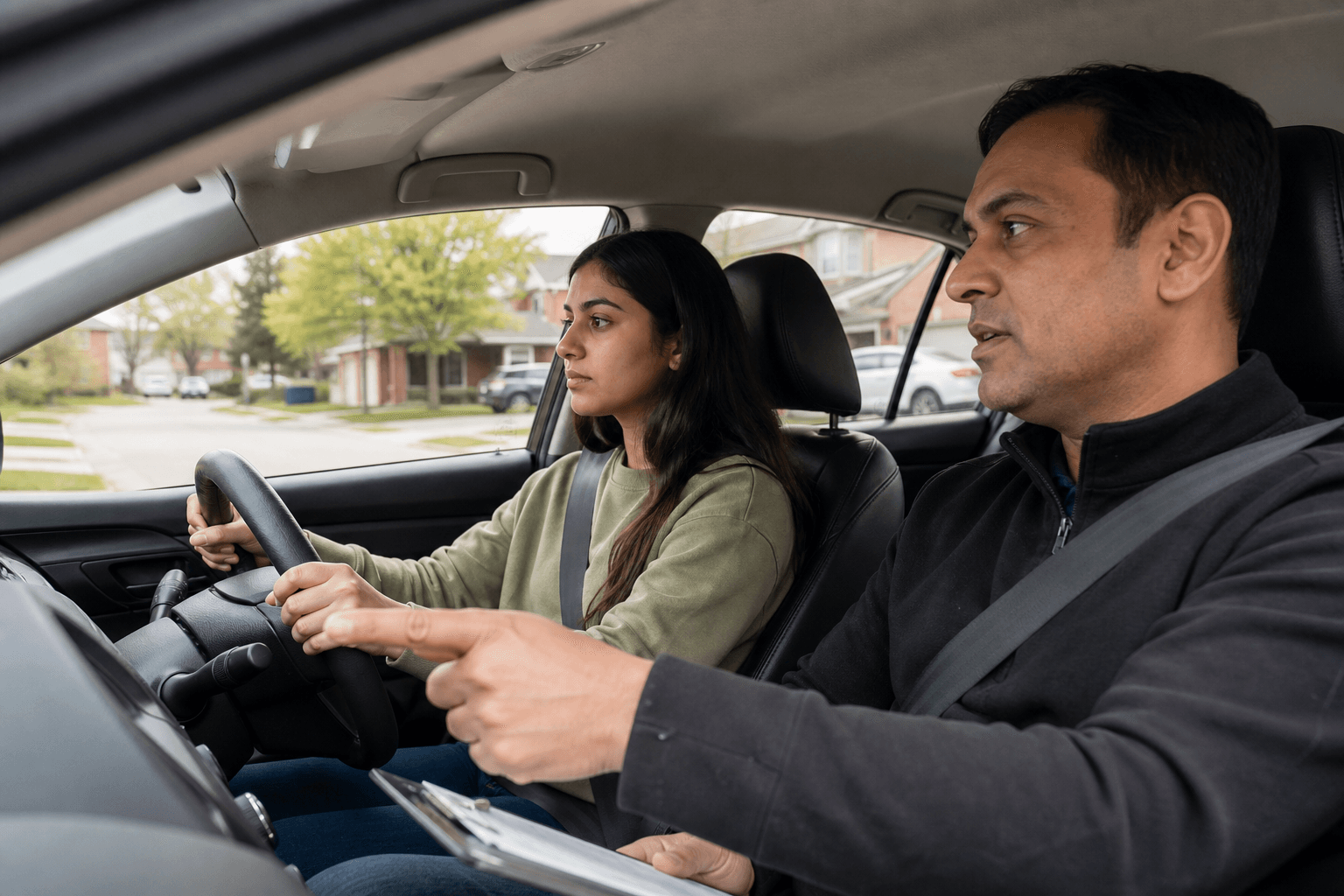
A G1 driver generally has three broad options: practise with a qualified supervising driver, take individual in-car lessons or enrol in an approved BDE program. These options are not interchangeable. Personal practice provides repetition, lessons provide instructor feedback and BDE combines structured education with practical training.
For a complete beginner, structured instruction can help establish safe habits before mistakes become routine. HT Driving School’s listed BDE structure combines 20 hours of self-paced online learning, 10 hours of Home Link and 10 in-car lessons, followed by an MTO certificate. Its MTO-approved Beginner Driver Education explanation describes how the online and practical components fit together.
Regular lessons may be more appropriate if you have completed driver education but need help with specific skills. Ask how lessons are assessed, how feedback is delivered and whether the schedule gives you enough time to practise between sessions.
BDE versus graduated licensing: what each one does
Graduated licensing is Ontario’s required pathway for new drivers. BDE is an education and training option within that broader journey. Completing BDE does not give you a G1, G2 or full G licence, and it does not remove the requirement to complete the applicable tests.
An approved school may provide a structured curriculum, online learning, in-car instruction and a certificate. Ontario also states that government-approved driving schools may help learners qualify for insurance discounts and take the G1 exit road test sooner, subject to the relevant requirements. Confirm both outcomes with your insurer and the school.
When comparing courses, check the practical details. Confirm the number of online and in-car hours, how completion is recorded, what certificate is issued, whether instructor choice is available and which test-day services are included. HT Driving School’s BDE package details list the course components, instructor choice and available road-test support.
Stage 2: Moving from G1 to G2
The first road test is the major milestone between G1 and G2. Your goal is not simply to feel comfortable on familiar roads. You need consistent, safe driving habits that you can demonstrate in an assessment setting.
Use your practice history to identify weaknesses before booking preparation. Consider whether you need more work with vehicle control, observation, decision-making, responding to changing traffic conditions or staying calm while receiving feedback.
Choosing lessons or preparation before the G2 test
General driving lessons are useful when you still need to build foundational skills. Targeted G2 road-test preparation is more suitable when you can already drive independently but need an instructor to identify inconsistencies and focus your remaining practice.
Preparation may also involve practical planning. Confirm who will provide the vehicle, whether it is available at your test centre, whether it has the required safety equipment and whether an additional practice lesson on test day is available. HT Driving School explains G2 road test preparation and the value of targeted in-car feedback.
A vehicle package can reduce one logistical concern, but it is not a substitute for readiness. Ask what the booking includes, where the vehicle can be supplied and what happens if your test centre is outside the local area. No instructor or package can guarantee a passing result.
Stage 3: Working toward a full G licence
After moving to G2, you continue gaining experience as a novice driver before completing the second road test for the full G licence. The full G stage is not just an administrative upgrade. It is the point at which you demonstrate greater independence and consistency.
The overall graduated licensing process takes at least 20 months. Exact personal timing can depend on eligibility, preparation and current testing procedures, so avoid planning around an assumed booking date.
Which type of driving support fits your stage?
- Starting from scratch: Consider an MTO-approved BDE course if you want structured learning, online flexibility and planned in-car lessons.
- Holding a G1 and needing practice: Individual in-car lessons may be enough if you mainly need feedback, confidence and repetition.
- Preparing for a road test: Choose targeted preparation when you want an assessment of your driving and a focused plan for remaining weaknesses.
- Returning after a long break: Refresher lessons can help rebuild safe habits before deciding whether you need a larger package.
HT Driving School serves learners in Brampton and the GTA with beginner, intermediate and experienced-driver instruction. Its packages can include local or distant test-centre vehicle support, practice before the test and early road-test booking assistance, subject to the package and current availability.
What to verify before enrolling
- Approval: Confirm that the school is currently approved by the Ministry of Transportation.
- Course structure: Ask how many online, Home Link and in-car hours are included.
- Certificate: Confirm what certificate you receive and when it is issued.
- Insurance: Ask your insurer whether the course qualifies for a discount. Do not assume a discount or percentage.
- Instructor fit: Confirm availability, location, scheduling and whether you can request a male or female instructor.
- Vehicle support: Ask about test-centre coverage, dual-brake equipment, arrival arrangements and additional practice costs.
- Current inclusions: Get package contents, availability and add-on charges in writing before registering.
A simple next-step checklist
- Before G1: Review the official handbook and prepare for the vision and knowledge tests.
- After G1: Decide whether supervised practice, individual lessons or BDE best fits your needs.
- Before the G2 test: Have an instructor assess your driving and confirm your vehicle and test-day plan.
- After G2: Keep building experience and plan for the second road test.
- Before booking support: Check current Ontario and DriveTest procedures.
Frequently asked questions
Can I start Ontario’s graduated licensing process before I turn 16?
No. Applicants for an Ontario car licence must be at least 16 years old. Prepare beforehand, but confirm current requirements when eligible to apply.
Is an MTO-approved BDE course mandatory for every Ontario learner?
No. BDE is a training option, while graduated licensing is the provincial licensing pathway.
Does completing BDE replace the G1 or G2 road tests?
No. BDE supports learning and preparation but does not replace the required licensing tests.
Can a BDE course help with insurance costs in Ontario?
It may. Eligibility and savings depend on the insurer and the learner’s circumstances. Confirm the outcome directly with your insurer.
What should I confirm if I need a car for my road test?
Ask whether the vehicle is available at your test centre, whether pre-test practice is included, what safety equipment it has, which locations are covered and whether extra charges apply.
Conclusion: plan the next licence stage, not just the next lesson
Understanding graduated licensing in Ontario starts with identifying your current stage. G1 is the entry point after vision and knowledge testing, G2 follows the first road test, and the full G licence comes after continued experience and the second road test. The complete process takes at least 20 months.
Choose support that addresses your actual need. A BDE course may suit a beginner who wants structured online and in-car education, while individual lessons or focused road-test preparation may be more appropriate for a specific skills gap. For BDE, driving lessons and road-test support in Brampton and the GTA, review the available options with HT Driving School.