
hafiz mahmood · 2026-08-26

Defensive driving techniques: What they are and why they matter
What defensive driving means in Ontario
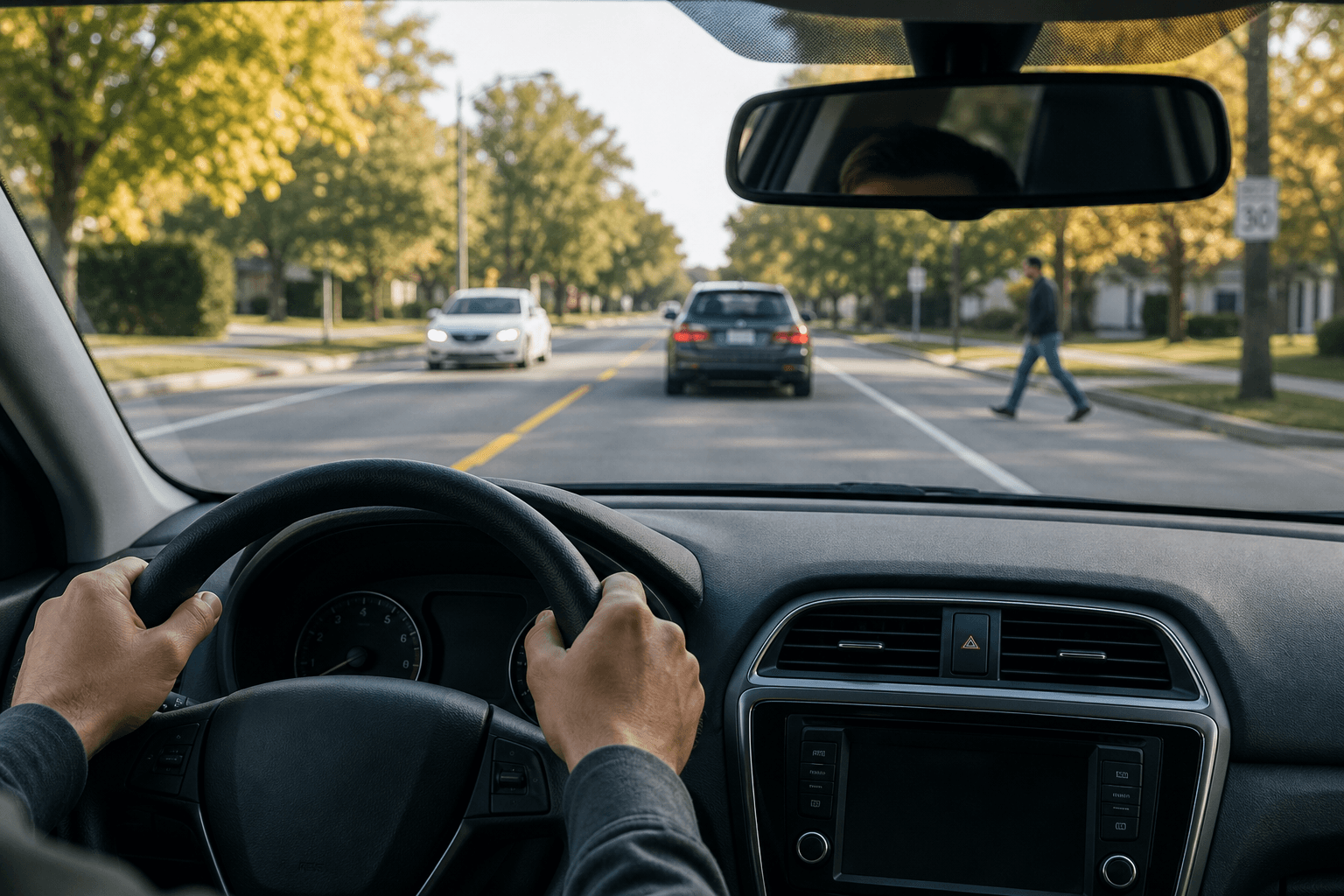
Defensive driving is strategic driving that helps you see hazards before they develop and respond early to avoid collisions. The Ministry of Transportation of Ontario describes defensive driving around three core ideas: visibility, space and communication. The MTO advises drivers to keep their eyes moving, scan ahead and to the sides, and check mirrors frequently so hazards are recognised in time to act. For a formal description see the MTO Driver's Handbook and the MTO Bus Handbook, which explain the same basic approach and the behaviours examiners expect during driving assessments.
Five core defensive driving techniques
The five techniques below are the practical backbone of defensive driving in Ontario. Each technique is defined in one sentence, followed by the single most useful action you can practise with an instructor.
1. Visibility: scan the road and check mirrors
Definition: Keep your eyes moving so you can detect hazards early and develop a plan to respond. Action to practise: run a continuous five to eight second visual scan, check your mirrors roughly every five seconds, and note escape options before you commit to a manoeuvre, as recommended by the MTO Driver's Handbook.
2. Space management: create buffer zones
Definition: Maintain safe space around your vehicle so you have time and room to stop or steer away from danger. Action to practise: use the two to four second following distance rule in normal conditions and increase it when roads, weather or traffic reduce grip or visibility.
3. Communication: make your intentions clear
Definition: Use signals, brake lights and eye contact where practical so other road users can predict your actions. Action to practise: indicate well before lane changes and turns, and couple signals with mirror checks to confirm others have space to react.
4. Speed and gap control: match speed to conditions
Definition: Adjust speed and create gaps appropriate to road, traffic and weather so you can stop safely for unexpected events. Action to practise: slow early for hazards, avoid abrupt speed changes, and leave extra space when approaching crosswalks, intersections or busy on-ramps.
5. Distraction management: prioritise driving tasks
Definition: Reduce in-car and cognitive distractions so your attention is available for hazard detection and vehicle control. Action to practise: complete pre-drive tasks such as programming navigation and setting climate controls, then keep phone use to a strict emergency-only rule while driving.
How each technique looks on Brampton and GTA roads

Below are short, practical examples students can practise during lessons in Brampton or elsewhere in the Greater Toronto Area. Each example includes one drill an instructor can run in a single lesson.
Visibility: rush-hour on-ramp drill
Situation: merging from an on-ramp into heavier traffic demands an early read of gaps. Practice drill: while approaching the ramp, scan the mainline for faster or slower lanes, check mirrors every five seconds, and pick two escape zones before merging. Repeat the merge with feedback on when you checked mirrors and how you judged the gap.
Space management: suburban school zone buffer
Situation: low-speed streets near schools require strong space discipline for pedestrians and parked cars. Practice drill: drive through a school zone at the posted limit, maintain a three to four metre lateral buffer from parked cars, and practise stopping smoothly for a simulated pedestrian crossing.
Communication: busy intersection signalling
Situation: multi-lane intersections and transit corridors are common in the GTA and need clear signalling. Practice drill: approach a busy intersection, signal early for lane changes, check mirrors and blind spots, and rehearse giving priority to transit vehicles while keeping your signal on until the manoeuvre is complete.
Speed and gap control: highway following distance
Situation: highway traffic density can change quickly during peak periods. Practice drill: at highway speed, pick a fixed roadside reference and count the seconds between the vehicle ahead and your car to maintain a two to four second gap. Increase the gap in rain or heavy traffic and practise smooth acceleration and braking to keep gaps consistent.
Distraction management: controlled cabin task routine
Situation: many collisions start with a momentary attention lapse. Practice drill: before moving off in a parking lot, complete a five-point pre-drive routine with your instructor present. The routine includes mirrors, seat, belt, phone stowed and planned route. Repeat until the routine becomes automatic.
To book supervised practice of these drills with a local instructor, see the driving lessons Brampton page where you can request specific lesson types and instructor preferences.
Why the MTO watches for defensive driving on the road test
MTO examiners confirm you can drive safely and predictably in real traffic. They look for early hazard recognition, consistent mirror use, maintained buffer space, and clear communication before and during manoeuvres. Practising the five defensive techniques improves the behaviours examiners notice, including scanning, mirror checks, gap selection and signalling, without promising a specific test outcome. For the MTO's expectations on safe and responsible driving consult the official Driver's Handbook.
How MTO-approved BDE and in-car lessons teach these skills

An MTO-approved Beginner Driver Education program combines online theory with in-car practice so learners connect why a technique works with how to do it under pressure. Theory modules explain the principles, home-link exercises reinforce decision making, and in-car lessons give practical repetition with instructor feedback. HT Driving School is an MTO-approved BDE provider in Brampton offering self-paced online e-learning and tailored in-car instruction, including dual-brake vehicles and male or female instructor options to match learner preferences. Practical lesson elements to expect include mirror and scanning drills, following-distance exercises, controlled emergency stops and distraction-reduction routines. For details on packages and in-car features visit the HT Driving School homepage and the driving lessons Brampton page.
Choosing lessons, instructors and road-test packages in Brampton
When you compare local options, weigh these selection factors:
- MTO approval and BDE certification, because recognised courses combine theory and practice.
- Instructor experience and local route knowledge, which help with realistic practice and test-day confidence.
- Availability of a male or female instructor if that affects your comfort or learning style.
- Vehicle safety features such as dual brakes for in-car safety and test supervision.
- Package components including online hours, in-car hours, practice on the test day and car availability for local or distant test centres.
- Scheduling flexibility and transparent pricing so you can plan lessons around school or work.
Questions to ask before you book: How many supervised in-car hours are included, can I request practice on the same day as my test, and does the school provide a car for tests at different centres? HT Driving School outlines these services on its pages and can confirm instructor choices and vehicle availability.
Two-page checklist and next practical steps
Use a simple two-page checklist to practise between lessons. Page one summarises the five techniques with quick prompts. Page two lists three weekly drills and a one-month practice schedule.
- Checklist page one: visibility scan every five seconds, mirror check points, maintain two to four second following distance, signal at least three seconds before lane changes at speed and a pre-drive distraction checklist.
- Checklist page two: weekly drills include one on-ramp merge session, one suburban school zone buffer run and one highway following-distance exercise. Add one 15 minute pre-drive routine practice each week.
Practice schedule: aim for two short instructor drills per week plus one solo supervised drive following the checklist. Track progress by noting how often you completed mirror checks and maintained gaps during each session.
Frequently asked questions
Will practising defensive driving help me pass my MTO road test
Practising defensive driving improves the behaviours MTO examiners look for, such as hazard recognition, mirror use, space maintenance and predictable signalling. While no practice guarantees a pass, focused training on these skills prepares you for the standard expectations described in the MTO Driver's Handbook.
Does completing an MTO-approved BDE course make me eligible for an insurance discount
Completing an MTO-approved Beginner Driver Education course can make you eligible for insurance discounts with some providers. Insurance policies vary, so confirm discount details directly with your insurer after you receive your BDE certificate.
Can I request a female instructor or a specific instructor for my in-car lessons
Yes. Many local schools let you choose a male or female instructor and may accommodate requests for specific instructors subject to availability. Ask the school when you book so they can schedule your preferred instructor.
Can the school provide a car with dual brakes for my road test and practice on the test day
Some driving schools supply dual-brake cars for in-car lessons and will provide a vehicle for test day where permitted. Confirm availability and any additional fees with the school when you book. HT Driving School lists dual-brake vehicles and test-day support among its services.
How should I practise defensive driving between lessons to get the most benefit
Follow a short structured routine: use the two-page checklist, do two focused drills per week with an instructor, and apply the pre-drive distraction routine before every solo trip. Consistent repetition of mirror checks, gap maintenance and early signalling converts these techniques into safe habits.
Ready to practise with certified instructors and MTO-approved curriculum? Learn more about lesson options and book a session at HT Driving School or schedule specific in-car sessions on the driving lessons Brampton page.