
HT Driving School · 2026-09-23
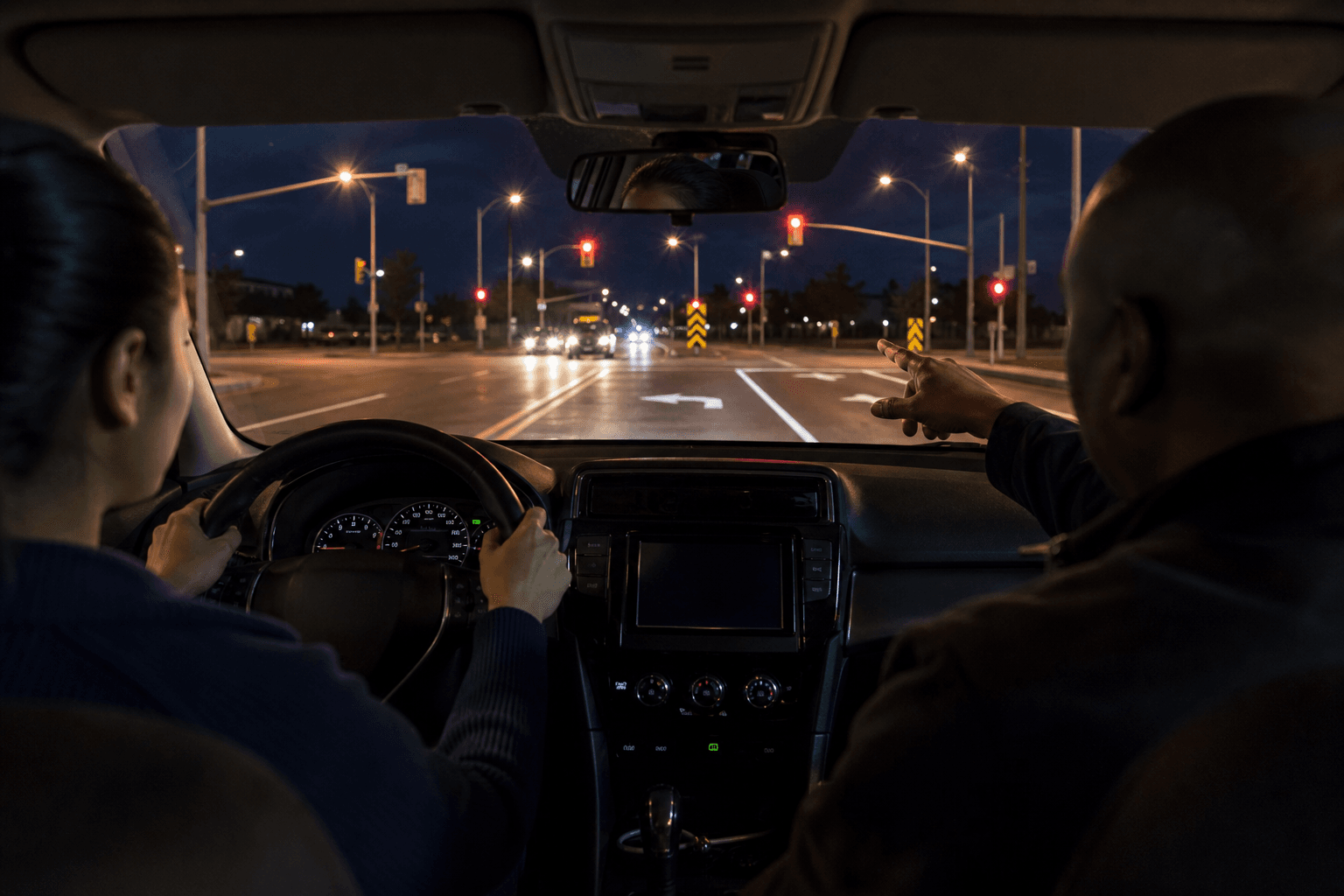
Night driving lessons can help when you have a specific concern after dark, such as headlight glare, reduced visibility, or uncertainty around pedestrians and cyclists. Before booking, confirm that the school actually offers practical instruction after dark and understand what the session includes. A standard lesson, road-test package, or BDE course does not automatically mean dedicated night practice.
For learners in Brampton and the GTA, the right option depends on experience. New drivers may need broader foundations before focusing on night conditions, while intermediate or returning drivers may benefit from targeted evening practice. Ontario’s official Driver’s Handbook identifies night driving, risk perception, distraction avoidance, and adverse conditions as important areas of driver education.
Which type of training fits your situation?
Start by identifying the problem you want to solve. A focused lesson may be appropriate if you already control the vehicle confidently during the day. If you are still developing steering, lane positioning, intersection, or speed-control skills, night practice should be part of a broader progression rather than your only training.
| Training option | Best suited to | What to confirm |
|---|---|---|
| Targeted individual night lesson | A driver with a defined concern after dark | Whether evening instruction is available, which skills will be practised, and whether the lesson is standalone |
| MTO-approved BDE pathway | A beginner who needs structured theory and in-car foundations | Course inclusions, lesson timing, certification, scheduling, and whether night driving is specifically included |
| Refresher or defensive-driving instruction | An intermediate or returning driver who wants to improve hazard recognition | How the instructor will assess current ability and tailor the session |
HT Driving School states that it teaches beginner, intermediate, and experienced drivers. Its listed BDE structure includes 20 hours of online learning, 10 hours of Home Link, and 10 in-car lessons. Ontario says government-approved driving schools meet requirements for classroom and in-vehicle training and may help students qualify for insurance savings or take a road test sooner. Confirm insurer requirements and course inclusions directly.
If you need focused help rather than a full course, ask about individual lessons and explain the conditions you want to practise. Learners starting from the beginning can consider an MTO-approved Beginner Driver Education program before adding targeted night practice.
What should night-driving lessons actually cover?

A useful evening lesson should involve more than driving around after sunset. The instructor should connect the practice to your concern and explain what to notice, predict, and do differently. Many relevant decisions require real-time, in-car feedback.
Visibility and glare management
Reduced ambient light can make road edges, signs, cyclists, and pedestrians harder to detect. Oncoming headlights, high beams, wet pavement, and poorly lit areas can create glare. Ask how the lesson will address visual scanning, appropriate speed, looking beyond immediate glare, and maintaining space to respond.
Hazard detection and decision-making
Night instruction should help you identify hazards earlier and decide when to slow down or wait. Practice may include pedestrians near crossings, cyclists with limited lighting, vehicles entering from side streets, parked vehicles, changing signals, and objects that blend into the background.
Following distance, lane position, and speed
After dark, extra space can provide more time to interpret an uncertain situation. The lesson should examine whether your following distance, speed, lane position, and intersection approach remain appropriate when visibility is limited. The goal is not simply to drive more slowly, but to select a speed that matches what you can safely see and predict.
Calm responses and safe habits
Some learners become tense when headlights appear suddenly or when they cannot identify an object ahead. An instructor should give clear feedback on scanning, steering, braking, and attention management. Night practice can be paired with defensive driving training to help learners anticipate hazards, manage glare, and make safer decisions.
Theory can explain these concepts, but online learning cannot reproduce vehicle-control practice or real-time feedback. HT Driving School describes its e-learning as working alongside in-car lessons, not replacing practical instruction.
What should you ask before booking?
- Does the lesson take place after dark? Ask for the expected start and finish time.
- What skills will we practise? Look for specific answers about visibility, glare, hazard detection, following distance, speed, or decision-making.
- How will you assess my starting point? The instructor should distinguish between foundational training and targeted correction.
- Where will the lesson take place? Ask how the route will match your goals and whether pickup affects practice time.
- What vehicle will be used? Confirm its condition and whether a dual-brake car is available if that matters to you.
- Can I request a particular instructor? HT Driving School states that male and female instructor choices are available subject to scheduling and location.
- What happens if weather or visibility changes? Ask about rescheduling and cancellation charges.
- What is included in the price? Confirm lesson length, taxes, pickup arrangements, vehicle use, and package requirements.
How do instructor choice, vehicle, and timing affect the lesson?
Instructor fit matters because night driving can expose uncertainty that is less noticeable during the day. Choose someone who explains decisions clearly, gives feedback at the right time, and can adjust the session if one skill needs more attention. A preference for a male or female instructor may affect your comfort, but availability depends on location and scheduling.
HT Driving School describes its training vehicles as well maintained and equipped with dual brakes. That supports asking about the vehicle, but you should still confirm which car will be used for your session. Timing matters too. A lesson just before sunset can cover changing light, while a later lesson may provide more consistent darkness. Match the timing to the situation you want to handle.
Why online learning cannot replace after-dark practice
Online study is useful for road rules, risk awareness, and preparation that fits around work or school. It cannot show how your attention, speed, lane position, or braking changes when glare and limited visibility affect what you can see.
HT Driving School lists its BDE pathway as 20 hours of self-paced online learning, 10 hours of Home Link, and 10 in-car lessons. Ask which in-car sessions, if any, occur after dark. Completing an online driving course in Ontario is not proof that you received practical night instruction.
Night-driving booking checklist
- Is dedicated after-dark instruction currently available?
- What specific skill or confidence gap will the lesson address?
- What start time, duration, pickup location, and service area apply?
- Will the instructor provide assessment and feedback during the drive?
- Can you request a male or female instructor, subject to availability?
- Which vehicle will be used, and are dual brakes available?
- How are weather, poor visibility, cancellations, and rescheduling handled?
- Is the lesson standalone, or does it require a package?
- What is the complete price, including taxes and vehicle or pickup charges?
- If you need road-test preparation, does the package address night confidence or only provide test-day vehicle support?
HT Driving School lists packages combining online learning, in-car instruction, practice, and road-test support, along with individual lessons. Confirm current availability and inclusions before registering because details and schedules can change.
Frequently asked questions
Should a beginner take night driving lessons before completing an MTO-approved BDE course?
Usually, beginners should first build basic vehicle control, observation, lane positioning, and intersection skills. Night practice can then be introduced progressively. Ask whether an evening in-car session can be added at an appropriate point in the training plan.
Does an MTO-approved BDE course automatically include dedicated night-driving practice?
No. BDE approval does not confirm that every lesson occurs after dark. Ask whether night driving is included, optional, or unavailable in the package you are considering.
Are road-test packages suitable for learners who lack confidence after dark?
They may help with test-day logistics, but a road-test vehicle is not the same as focused night instruction. If your concern is glare, visibility, or hazard detection, request a practical lesson addressing those skills before choosing a road-test package.
Choose the lesson that matches the gap
Targeted night driving lessons make sense when you can name the after-dark problem you want to improve and the school can confirm practical instruction at a suitable time. New drivers with incomplete foundations may be better served by an MTO-approved BDE pathway, while returning or intermediate drivers may need refresher, defensive-driving, or collision prevention training.
The key check is simple: confirm what will happen in the vehicle before booking. Ask about timing, skills, instructor fit, vehicle, route, price, and inclusions. To discuss current night-lesson availability, instructor options, scheduling, and package fit in Brampton or the GTA, contact HT Driving School.